 For Lots of Rhubarb Recipes and More Get Connected


Learn a Few Simple Pastry-Techniques
Working with Dough
Don't know any pastry-techniques? Learn to properly roll, patch your dough, and use a pastry-cloth.
And, wouldn't some simple tips to improve the look of your rhubarb pies or tarts come in handy?
It's heartbreaking to serve pies especially that do not have a smooth finish due to lumps and chunks and missing pieces of crust.
Very visually unappealing!
There is a knack to learning how to roll out a crust. I know, because I seem to be short ALL of the time.
I also am guilty of the lumpy chunky looking crust. I always have to patch, and I admit, it isn't pretty.
Some of us certainly could benefit from a few tips I'm sure.
You may recognize some common problem areas and be able to begin to utilize some of the suggestions made here. There are a number of ways you can improve on your pie-baking- skills if you know a few tips and pastry-techniques beforehand. They can help to avoid some mistakes we have all made at one time or another.
It all begins with mixing the dough. Ingredients should be chilled to promote tenderness and flakiness of the pastry.
Butter or shortening are the fats that in solid form makes this happen, so don't melt your butter. Make sure your mixture is crumbly, and then chill the dough as a whole.
To avoid pastry sticking to your rolling pin, invest in a cotton sleeve that fits over your pin. A pastry-cloth can be purchased just about anywhere. Flour the sleeve and the pin before rolling.
Mixing the dough is done just enough to combine the ingredients to form a ball. The more the pastry is handled, the more gluten is formed. Gluten forms when flour and liquid are mixed, and this is what makes a crust tough. So, mixing just enough to moisten is recommended for a reason.
Add a bit of water to your dough if it breaks up when rolling.
It could be too dry. If the dough is too cold, the edges will crack and you don't want that either. Let it warm a little. But again, not too much either. You want the fats to stay in a solid form.
To avoid a soggy crust, partially pre-bake the crust first before adding the filling. Use beaten egg to seal the top crust if this is a 2 crust pie. You can brush the bottom of the pie with beaten egg also but do it sparingly.
To ensure a nicely browned bottom crust, begin baking at 425F and then reduce the heat. The filling will cook but the crust will not burn.
If you have to pre-bake your crust, you want to avoid shrinkage.
Poke holes in the bottom to allow steam to escape. You would not do this if your filling was like a custard. The custard would seep through the holes. Pastry-techniques in this instance also include covering the crust with parchment paper and placing pie weights on top. This will avoid shrinkage and puffiness or your crust lifting from the bottom.
To avoid a runny filling causing too much moisture, before baking, try one of these pastry-techniques.
Sprinkle a little additional cornstarch or flour over the mixture before you put on your lattice or top crust.
Some pie crusts are too white or colorless. To ensure a nice golden color, brush the top with beaten egg or milk and before you poke holes in the top for the steam to escape.
Vinegar in pastry promotes a tender crust, but unfortunately can prevent browning as well. Add some sugar to your dry ingredients to counteract this vinegar effect.
To avoid crust edges burning, I put strips of foil around the pie. Take the foil off toward the end of the baking process, and the edges should turn a lovely golden color.
Do you have a huge space between your top crust and filling? This would mean that the fruit cooked down too much. As the volume decreased, the crust hardened and stayed where it was, or the fruit may have been piled too high to begin with before baking.
Try cooking the filling down a bit in a saucepan first (with all spices etc.) and let it lose some of the volume. It will thicken in the process too. Fill the crust, cover and bake as usual.
Always have a cookie sheet underneath your middle rack or under the pie itself to catch filling that bubbles over and avoid making a mess of your oven.
Finally, you can freeze your rhubarb pie raw or baked.
To bake a frozen pie, don't defrost it first. Bake it frozen either as per directions or for 45 - 50 minutes at 400F. Don't forget to poke holes with a fork to allow for the steam to get out.
Thaw a baked frozen pie for 30 or 40 minutes, and then bake at 350F for 40 minutes or at least until completely heated through.
Have a look at the videos to reinforce some of these pastry-techniques. They are very simple and to the point.
I hope these pastry-techniques have helped you identify some problems you have had when making pastry and pies.
I'm sure your next rhubarb pie will look as wonderful as it tastes.
Return to Culinary Tips
Return To Rhubarb Recipes
Leave Pastry-Techniques, Return To Savor The Rhubarb Home Page.


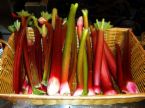

Rhubarb Gin Cocktail
Made it myself! Try one.

New! Comments
Have your say about this topic. Leave me a comment in the box below.