 For Lots of Rhubarb Recipes and More Get Connected


Rhubarb-Varieties,
Different Types of Rhubarb
There are many types of rhubarb-varieties to choose from now that you are ready to plant your garden. Rather than buy, you may decide to start your plants from seed, and purchase rhubarb-seeds instead.
Rhubarb started from seed usually takes at least two years to produce enough rhuarb-plants for picking.
As long as you are aware of this, seeds can be purchased from a number of companies.
The seeds are soaked overnight in water first, and then transferred to small pots. Many people prefer to put them into peat pots. This makes it easier to replant later to outdoors as the weather gets warmer in the early spring.
Rhubarb requires sunny conditions, but at this young stage of their lives, the seedlings can be harmed by the direct sunlight. They need to be shielded to some degree.
Your plants should be moderately watered. Not too much! Over-watering will result in rotting of the leaves and stalks.
Your plants should be approximately a foot high by the end of the season. They will certainly need another full growing season to produce enough to pick. So, leave them there until next year.
Well established rhubarb roots are the quickest way to begin your planting.
Beg, borrow or steal a chunk from a friend or neighbor if you can. Or, you may simply purchase your choice of the many rhubarb varieties of crown roots from a nursery if they have them.
Of the rhubarb-varieties, the two main groups are Hothouse and Field-grown.
Hothouse rhubarb
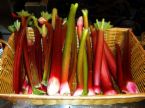
Pink to pale red stalks with yellow and green leaves.
Field-grown rhubarb
Bright red stalks and deep green leaves are what I am most familiar with. These stalks are extremely juicy and have that great combination of a much sweeter and tart taste at the same time.
CHERRY RED
RUBY
CANADA RED
CRIMSON
VALENTINE
MACDONALD
These varieties are quite colorful and described by color as red, green or speckled with pink. We tend to prefer the red because we think it is sweeter for cooking purposes. This is not always the case. Green stalks are just as good.
Canada Red Rhubarb
A variety I have bought and get get good results. Stalks are short and slender and very red. They are in fact sweet. They just don't produce as many seed stalks.
Cherry Red Rhubarb
Have long stalks that are thick and they too are red. They produce quite heartily and are sweet and tender as well.
Crimson Red rhubarb
Have very tall stalks and are brilliant red in color.
The MacDonalds' Rhubarb
Variety is bright red also, very tender, and an excellent producer of stalks.
The Valentine Rhubarb
Dark red in color both raw and cooked. It does not have as much acid and does not produce many seed stocks.
The Victoria Rhubarb
This brand is the speckled kind. The stalks are green, but speckled with pink at the base of the plant.
If you want your rhubarb stalks to be red throughout, look for the "Crimson" variety. They can also be known as Crimson Red Rhubarb, Crimson Wine Rhubarb, or Crimson Cherry Rhubarb.
Generally speaking, these rhubarb-varieties are considered all good eating plants.
If the weather seems to be still a bit frosty outside in the early spring, not to worry. Go ahead and begin to plant. The rhubarb will survive.
The crown should be a few inches below the soil level and have at least one good bud on it. Be sure it is free of rot. Plant 3 feet apart or even more if you have the space. The rows should be well spaced too.
Your plants should also be off to one side of your garden. The foliage can become quite huge and you don't want them interfering with your other flowers or vegetables.
Give your rhubarb enough room to flourish.
And flourish they will. There is no reason not to.
With any one of the rhubarb-varieties you have chosen, they are sure to provide you with years of good produce.
It just takes some time and patience to allow the plants to develop a solid and strong root system and get to the good producing stage. Don't be tempted to pick too early.
This is my own Canada Red Rhubarb Variety, which has grown quite well in a container.
Return To Rhubarb Garden
Leave Rhubarb-Varieties
Return To Savor The Rhubarb Home Page


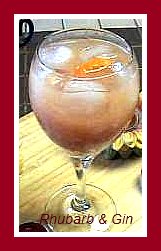
Rhubarb Gin Cocktail
Made it myself! Try one.

New! Comments
Have your say about this topic. Leave me a comment in the box below.