 For Lots of Rhubarb Recipes and More Get Connected


Lots of Rhubarb-Trivia
Funny Rhubarb Facts
Interesting rhubarb-trivia bits and pieces that unfold from funny rhubarb-stories. When you take this into consideration, it hardly remains just a pie-plant. More like a very interesting plant with an almost mysterious background.
There is so much to know about this sour vegetable. It really does have quite an extensive background and unique rhubarb-stories and rhubarb-humor associated with it.
The
origin of rhubarb
is quite interesting in itself. Have a look.
So, we know you can dye an egg, dye hair or even make yourself a sweater with it. You can even use rhubarb fiber to make a nice homemade paper. You can also make a stepping-stone or a birdbath out of a rhubarb leaf.
But, did you also know...
A Bit of Cultural History
The word rhubarb comes from the Latin word "rhababarum" which means "root of the babarians."
The Romans labelled people who ate rhubarb "barbarians."
The Chinese were cultivating rhubarb as early as 2700 BC.
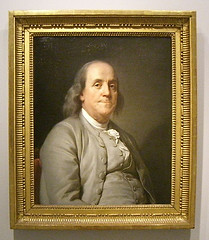 Ben Franklin saw that seeds
were sent in the late 1700's to
the Quakers on the American East
Coast. (Thanks Ben!)
They called it the "Persian Apple" because it was thought to be an exotic fruit from somewhere in Asia.
The Russians took some rhubarb to Alaska in the 1800's because they thought it would protect the people from scurvy.
A Valuable Commodity
Over the 19th century, the tea and rhubarb market from China was flourishing.
Because of the reputation rhubarb had as possessing wonderful medicinal qualities, it became quite desirable to have on hand.
As early as the mid 1500's, it was much more expensive than the cinnamon in France. By the mid 1600's, rhubarb was double the price of opium in England.
There is some documentation attesting to the fact, that if you had the misfortune of being imprisoned, a little rhubarb knowledge could be as good as a "get out of jail free" card.
Apparently, a few lucky people passed on their medicinal
knowledge to the "higher-ups" and were released because of it.
Rhubarb Provides Relief for Acid-Reflux
Rhubarb Cure for Hot-flashes Accompanying Menopause?
Note - Some computer graphics aren't picking up that these are actual movies - just tap the screen in the middle with your mouse if that's the case.
Those Crazy Kids
Rhubarb Eating Contest Challenge
Awww....Poor Baby Eating Rhubarb
Basic Rhubarb-Trivia
Vegetable Facts & Ironies
Rhubarb is a great substitute for cranberries because of the bitterness and the high acidity.
The redder the stalk, the sweeter the taste.
"If the stalk is green, it's not good."
(Not true, it is just a different type)
The Rhubarb Tart Song
By John Cleese of Monty Python Fame
Gatherin' Rhubarb
Some Interesting Facts on Quality Controlled Rhubarb
Roobarb & Custard, Popular 70's Cult Film Cartoons
More Ironic Rhubarb-Trivia Facts
Rhubarb was used to protect from gum disease, yet it could give you a terrible stomach ache.
It was given as a general overall tonic for whatever ails you.
It was given to children as a blood purifier, or to induce vomiting, and yet was a wonderful cure for constipation.
Rhubarb is capable of cleaning a burned pot and yet capable as well of ruining another depending upon the material the acids are acting on.
Rhubarb makes a wonderful dessert, yet the leaves can be made into an environmentally-friendly liquid strong enough to kill a variety of garden bugs.
Interesting Self Irrigated Rhubarb Discovered Recently
English Language and Vocabulary
There is controversy over which country the word "rhubarb" truly originated. There seems to have been great controversy between Britain and Germany in the 1400's.
The word "rhubarb" was also given a particular meaning. It also could mean "a very loud dispute" and it was used to simulate a noisy background crowd.
It was very common in the 1930's to use actors to repeat or mutter the word "rhubarb" continuously to provide radio sound effects.
In the 1940's, it became popular to associate the word with angry fans, team-players or umpires at sporting events.
I don't think anyone will ever know the true history, and I think some people just plain like using the word.
Maybe these people in the video below know something we don't. What in the heck were they thinking? Be prepared...
Meet
Rhubarb the dog
for a story that tugs at your heart-strings, but don't worry, it's a happy story thank goodness.
Speaking of the theatrical crowd earlier, rhubarb-trivia has a connection to the popular radio show, A Prairie Home Companion, which was also made into a popular movie.
Visit A Prairie Home Companion
Have you seen the movie "Rhubarb?" A popular 1951 movie centered around "Rhubarb" the cat, who has been left a baseball franchise by his rich owner. Gotta love those old movies!
Fun Film Talk - a Great Spot to Talk about Movies, Film & Filmmaking
Here at Fun Film Talk we love to indulge in our love of all things film, whether that means going to movies, enjoying them on DVD at home, or even making our own films with newly available and affordable digital equipment. Bottom line, if you're a huge fan of movies as I am, this is a fun web site you'll enjoy visiting often.
Rhubarb-Trivia Out of the Mouths of Babes Definition
"A KIND OF CELERY GONE BLOODSHOT"
I found this video that I thought was kind of cute. It's the song "Rhubarb Pie" sung by John-Fogerty of Creedence-Clearwater-Revival.
I wore out their albums in the 1970's, but it wasn't for songs about rhubarb back then.
Leave Rhubarb-Trivia
Return To Savor The Rhubarb Home Page


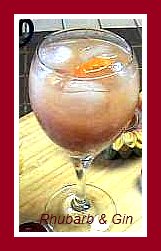
Rhubarb Gin Cocktail
Made it myself! Try one.

New! Comments
Have your say about this topic. Leave me a comment in the box below.