 For Lots of Rhubarb Recipes and More Get Connected


Rhubarb-Pests
Rhubarb Crown Root Rot
Deter rhubarb-pests like aphids and potato-bugs from destroying your garden with some preventative action. Knowing how to fight some of the common problems beforehand can save a lot of grief.
Rhubarb growers face the same general dilemmas as any other gardener.
Potato-bugs, beetles and many other plant insects can become quite a nuisance. These bugs lay their eggs on the rhubarb stalks and stems. Eventually they begin to feed on the leaves. You will notice the leaves will become wilted and probably full of holes.
Slugs can be a problem in areas that are weedy and have poor drainage.
You can begin to solve this problem by keeping your garden area well weeded. The weeds are one reason that attracts the bugs in the first place.
Insect problems can result also by having your rhubarb too close to your other garden plants which could be infested which is another good reason to plant your rhubarb off by itself in the far end of your garden.
The bugs can be picked off the plant by hand, or simply take a spray bottle of mild soap and water and give them a light misting.
Snout beetles burrow into your roots, crowns and stalks. You must treat with insecticide and/or burn badly infected stalks after these rhubarb-pests lay eggs usually in July.
Fungus growth can occur on the crowns and stems resulting in rot.
This is due to overly humid conditions and poor air circulation. You will see spots on the leaves and possibly holes in the leaves as well.
Remove the affected leaves from the stems and apply a fungicide as directed.
A serious crown root rot caused by fungus is called Foot Rot.
These plants have to be dug and discarded. The best idea would be to relocate your rhubarb bed if the area does not dry up.
Red Leaf disease is found in Western Canada, and it is not known what causes it. The leaves become reddish and wilt quickly. New leaves do not grow. Decay is prevalent below the ground in the centers of what looks like healthy roots.
These plants must be removed immediately, and new plants should never be replanted in this area.
So, keep an eye out for unwanted bugs and slugs, and signs of leaf decay. Establish a weed control schedule.
Water only as necessary.
Let your rhubarb garden breath by giving it the space it needs.
AN OUNCE OF PREVENTION IS WORTH A POUND OF CURE!
Make sure you have rhubarb for next year!
If you have flowers close by your vegetable garden, keep an eye on those as well. Everything interacts. Aphids actually love roses too and should be checked periodically.
For some wonderful information on pest control and overall care
of your rose garden, see this site.
Rose Gardening Made Easy
How To Get Rid of the Slugs
Rhubarb-Curculio, These You Don't Want
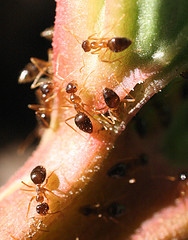
Control those Rhubarb-Pests
With a Simple Aphid Spray.
Whether you're an organic garden newbie, or an inexperienced
gardener this great site will provide you with the latest
time-tested information on Organic Gardening and Organic Pest
Control. Check it out!
Leave Rhubarb-Pests
Return To Home Page




Rhubarb Gin Cocktail
Made it myself! Try one.

New! Comments
Have your say about this topic. Leave me a comment in the box below.