 For Lots of Rhubarb Recipes and More Get Connected


Slug-Catcher Solutions
Preventing Leaf Damage
Best Slug-Catcher and natural trapping-slugs methods used to save your plants usually work out to be the best ones.
Did you know that a great method of catching slugs can be as simple as using a bottle of beer?
There are many commercially produced slug-bait products as well, and are quite effective in controlling the common black-slug or garden slug as I know them.
Read about Effective Molluscicides For Slugs and Snails
These baits are in the form of slug-pellets, but can be toxic to people and pets. They need to be used exactly as directed.
If you have children or pets or both, you may want to consider
some other alternatives.
I don't spot the slugs easily. The ones I am used to here are
fairly small and greyish and some are brownish.
I can spot however the damage they cause to my garden as summer progresses. I think my Hosta plants take the hardest hit in addition to everything else.
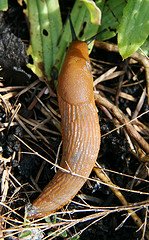
Black-slugs or garden-slugs are slimy little guys who live in the ground, and are always hungry for a wide variety of vegetation.
Young seedlings or well established older plants make no difference to them. It's all the same meal and equally tasty.
Spring is prime-time, because everything is so wet.
They love the moisture. Where there is some spring-thaw and some dampness, that's where they will be. They are not only limited to a garden either unfortunately. They can be found in groups on walkways or on walls, and even in basements.
The wetter the better for a slug!
There are quite a variety of types too. There is the black-slug, gray-slug and leopard-slug. The colors range from gray to orange to the brightest yellow.
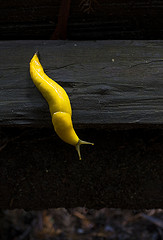
The yellow ones are known as a banana-slug, which is usually referred to also as a California or Pacific slug. Their color variety varies from shades of brown, green or even white. They can get up to 9 inches in length or better.
They love any leaves, mushrooms and animal droppings. They feed, and then recycle it all back to soil.
My mother deals with the black-slug in British Columbia. She says she has never seen the banana-slug and doesn't want to. I guess they have quite a time there with the black one, as they crawl up their windows and doorways.
What she hates the most are the incredible trails of slime they leave behind. The slug-catcher they use is salt.
Overall, salt is very harmful to all slugs. Water spreads through the skin surface and mixes with the salt causing dehydration of the slug.
The slugs lay eggs in the Spring and early Summer too, meaning they can produce two generations.
The eggs are deposited in moist places such as under mulch or rocks or any type of debris. Any place cool and damp is ideal.
They hatch and can mature by Fall, and live throughout the Winter months.
Slugs come out at night to feed. They are not active at all in the daytime. This is the best time for your slug-catcher of choice.
I have used the flower-pot and the wet newspaper methods. This works. They are simply put out for the overnight and act as shelter and an attraction for the slugs. In the morning they are gathered up and discarded.
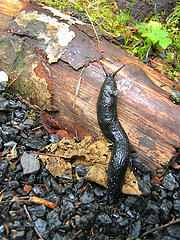
The beer method is great. A small dish like an old margarine
container is filled halfway with beer and placed in the ground with the top at surface level. The slugs are attracted and just fall in. The container is emptied and refilled again for the next night.
This video by John at Youtube shows just how well it
works and how easy it is.
In fact, near-beer or whatever ferments such as a yeast, water
and sugar mixture will do also as a great slug-catcher.
A rough dry mulch can also be placed around your plants.
Most slugs simply won't crawl over it, though the slime of the banana-slug protects them. The slime they excrete is so thick,it helps them to almost glide over any rough patches. It protects against the predators of these slugs.
Lime works as another protective barrier around your plants. It burns and so slugs will avoid it.
I think I will use the beer method slug-catcher this summer for my plants.
It's simple, not messy, and I don't think anyone will bother
it. Try it for yourself.
Leave Slug-Catcher
Return To Rhubarb Companions
Return To Savor The Rhubarb Home Page


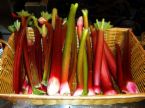
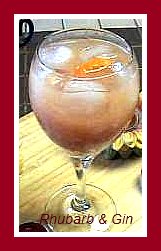
Rhubarb Gin Cocktail
Made it myself! Try one.

New! Comments
Have your say about this topic. Leave me a comment in the box below.