 For Lots of Rhubarb Recipes and More Get Connected


Basic Rhubarb-Wine Recipes
Produce Wine With Your Rhubarb
It goes without saying that most rhubarb-wine recipes involve large quantities of produce and good wine-making-instructions.
Be sure you have enough rhubarb, enough time to prepare it, and lots of patience to wait for the final product.
We've got some general videos here further down the page, and certainly people do things differently. Check them out.
Some general knowledge of the wine-making process would certainly be an asset for beginners who think they might like to dabble in homemade wine-making.
Familiarize yourself a little with the terms that are commonly used by winemakers and you will be prepared ahead of time for the recipes that are more involved than others. See
Common Wine-Making-Terms
. Be aware of what is available to store your wine too.
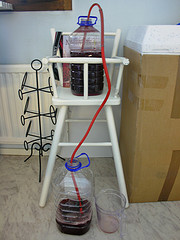
Generally, the rhubarb is chopped, added to water, covered and set aside to ferment in a warm environment. This is only the beginning.
The liquid is repeatedly filtered and siphoned at different intervals over a period of months to ensure a fantastic tasting rhubarb-wine in the end.
During the course of the process, sterile conditions are a must, though some recipes call for specific bacterial killing agents, while others don't seem to.
Different forms of wine-making equipment can be used.
A hydrometer for example will help you determine what stage your homemade-wine is at in regards to sugar or alcohol content.
As the filtering process comes to an end, the wine should be getting clearer. This is the result you want to achieve.
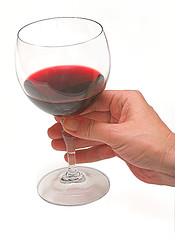
RHUBARB-WINE
5 pounds rhubarb
1 1/2 gallons boiling water
1 cup raisins
3 pounds brown sugar
3 oranges sliced
3 lemons sliced
1 tblsp. active yeast
Method
Chop all rhubarb and put into a crock-pot. Add the boiling water and let it sit for 3 days covered.
Filter the liquid, and to that add chopped raisins, fruits and sugar. Add the yeast and stir well.
Cover the pot again and leave in a warm area for 30 days to ferment. Give the mix a stir daily.
Filter the mixture again and pour into well sterilized bottles and keep in a cool area.
The wine will taste the best the longer it is allowed
to age.
Rhubarb Mead, The Oldest Alcoholic Beverage
Try your hand at Rhubarb Champagne
More info on Wine? See The Wine Cabaret
CINNAMON RHUBARB-WINE
12 cups chopped rhubarb
1 or 2 small cinnamon sticks
8 cups white sugar
1 1/2 gallons water
1 tsp. nutrients
1 package of wine yeast
2 campden tablets
1/2 tsp. pectic enzyme
Method
Put the water into your sterile container and add the campden tablets. Mix well and add the rhubarb. Let this stand for a few days and stir each day.
Strain the liquid and add sugar and nutrients.
Add the yeast and stir. Cover and let stand for 1 day.
Filter into another container and add the cinnamon sticks. Attach an airlock.
DRY WINE
For one year, the wine is racked in the first 3 weeks, and then repeated every 3 months for one year. The wine is then bottled.
SWEET WINE
After the first siphoning at 3 weeks, add 1/3 cup sugar.
Mix the sugar with the wine first and return to the liquid and place in a secondary container or fermentor. Repeat every 5 or 6 weeks until the fermentation process stops with the adding of sugar.
Rack every 3 months for one year.
Making Rhubarb Wine With Jason
Looking for a good read? I've had the privilege.
The Rhubarb Club book by Dr. Allen Ward is distributed through WordsWorth Books in Little Rock. Their website is at: http://www.wordsworthbooks.org
They receive orders also via email: [email protected] - by phone: 501-663-9198, and by Fax: 501-661-9215.
Check this one out!
PLAIN RHUBARB-WINE
Chop 3 lbs. of rhubarb and cover with 3 lbs. of white sugar.
Leave overnight until sugar has dissolved. Collect the syrup the next day, and also rinse with water. Keep this liquid as well and add to the syrup.
Add enough water to make one gallon of liquid. Add 1 1/2 cups strong tea.
Add 1 packet of regular wine yeast. Transfer all to a demi-john with an airlock, and set aside to ferment.
Add 2 campden tablets when your hydrometer reaches approximately 1.01 to stop the fermentation.
Let the wine clear on it's own.
Pour into sterilized bottles, and store in a cool place for approximately 12 weeks.
Store Wine Properly For Your Drinking Pleasure
Enhance your red wine by adding a few little twists
2 cups Red Wine
vanilla bean scored
3 tsp. ginger
3 tsp. cinnamon
1/4 cup rhubarb juice
Combine and store for 3 days before drinking. This can be heated and served warm.
Looking for fruity enhancements for cocktails?
Rhubarb Bitters
by the Fee Brothers has just been added on to their growing list of special flavorings.
New to the world of wines? Looking for information on calorie content, how to match wines with food? Visit the Valley Wine Shop
Beginners Wine Guide
for answers to these types of questions and much much more.
If you are new to making wine at home, chances are you could benefit from tips and techniques from those who have done it. If so, why not participate in this
homemade wine makers forum
for help. These people are experienced and beginners as well. You are sure to pick up some good ideas and guidance.
RHUBARB-WINE WITH LEMON
5 lb frozen rhubarb stalks, chopped into 1 inch lengths
3 ½ lb white sugar
Wine yeast
Boiled Water - 1 gallon
2 lemons, lemon zest
Thaw rhubarb in a large pail. Extract as much of the juice as possible, and add the water to the juice. Let sit 3 days.
Stir 2 or 3 times per day. Strain off, squeezing any pulp as dry as possible.
To every gallon of juice, add 3 ½ lbs sugar, the juice of 2 lemons and the zest of one lemon. Stir well until the sugar has dissolved.
Sprinkle yeast over the surface. Let sit 3 days, and pour into
demijohns. Place on air-lock and leave in a warm place for 3-6 months or until fermentation is complete. Bottle and drink in 18 months.
WINE INFUSED WITH RHUBARB AND HONEY
1 bottle inexpensive dry, light white wine
5 stalks (3 cups chopped) rhubarb
1/2 cup honey
1/2 cup vodka
8 sprigs mint
Pour wine into a large glass bowl, or divide the ingredients evenly into 2 large jars. Add all ingredients to the wine. Stir well to combine and dissolve honey thoroughly.
Store covered in a cool dark area for 4 days. Stir regularly over that time period.
When the wine has absorbed all color from the rhubarb, it is ready for straining through a mesh or cheesecloth.
Apply enough pressure to release the rhubarb-wine from the solids.
Divide wine between 2 sterile jars or 2 wine bottles.
Cap, and refrigerate up to 4 months. Serve well chilled.
You can substitute - 1/2 and 1/2 rhubarb and strawberries.
Looking for some more detailed information about home-winemaking?
The Food Skills For Self Sufficiency website offers some great info. Visit and be sure to read up on
making wine
Parts 1 and 2. Great visuals!
Return To Rhubarb Beverage Recipe
Leave Rhubarb-Wine
Return To Savor The Rhubarb Home Page


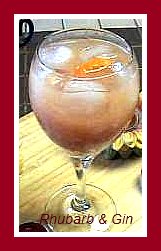
Rhubarb Gin Cocktail
Made it myself! Try one.

New! Comments
Have your say about this topic. Leave me a comment in the box below.