 For Lots of Rhubarb Recipes and More Get Connected


Commonly Used Wine-Making-Terms
Learn The Wine Lingo
This list of wine-making-terms will give you a much better picture of the procedure as a whole. A handy little wine-dictionary to use when making wine at home.
Some recipes can be quite overwhelming at first, but to understand what the wine terms used actually mean might just keep you from shying away from homemade wine recipes in general.
Refer to this wine-dictionary of common terms you need to know.
The definitions are fairly simple for anyone to understand I think, and certainly gives a good indication of the equipment that can or should be used depending upon which recipe you decide to tackle.
Refer to the wine-making-terms chart whenever necessary and your homemade wine project will be that much more of a success.
ACID BLEND A blend of primary acids in fruit that is added to bring out the fruit taste.
AGING The period when fermenting takes place naturally over time.
AIRLOCK Device which allows gases to escape but does not allow contaminents in. Usually used in secondary fermentation.
BALLING Measurement found on some hydrometers that measures sugar level.
BODY Feel of the wine when tasting.
BOUQUET Aroma of wine.
BRIX Same as balling.
CAMPDEN TABLETS 1 tablet per gallon will kill any wild bacterias such as mold or vinegar. Used also as a sanitizer.
CARBOY Glass jugs as a secondary fermentor.
FERMENTATION When yeast breaks down sugar into alcohol.
FINING
A technique to make wine clearer.
For Port Wine Stain Cleaning, Visit The Carpet Wizzard
GRAVITY Specific gravity.
HYDROMETER Instrument that measures sugar content of juice. Floats in the liquid.
LEES Layer of sediment forming on bottom of container during fermentation period.
LITMUS PAPER Strip of treated paper to check acid levels of juice.
MEAD Wine-like liquid made from using honey.
MUST Prepared juice just before fermentation.
NUTRIENTS A blend of substances added to enhance fermentation.
PECTIC ENZYME Liquid added to crushed fruit to increase juice extraction.
pH Scale from 0 - 14 measuring acid levels.
POTASSIUM SORBATE Added to wine to ensure fermentation does not start again after bottling.
PRIMARY FERMENTATION Rapid fermentation happening in the first 7 days of wine making after yeast is added.
RACKING Siphoning of wine off the sediment into a sterile container.
SECONDARY FERMENTATION Slow and steady continuation of fermentation after the primary. Can last for 4 weeks.
SODIUM BISULFITE Like a campden tablet, another kind of powder used for killing bacteria.
SPECIFIC GRAVITY Scale on the hydrometer used to measure sugar.
TANNIN Powder which adds a bit of zest to wine; helps to clear it.
VINEGAR What wine turns to when infected with vinegar bacteria.
YEAST
Eats the sugar in the juice and produces alcohol and carbonated gas.
Hope this wine-glossary of common terms was helpful.
Return To Rhubarb Wine
Leave Wine-Making-Terms
Return To Savor The Rhubarb Home Page


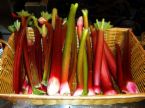
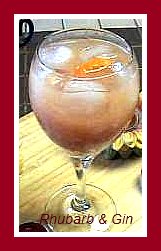
Rhubarb Gin Cocktail
Made it myself! Try one.

New! Comments
Have your say about this topic. Leave me a comment in the box below.